
Finding the floor under the floor
Many homes and condos here have concrete slabs under tile, carpet, laminate or vinyl. When those coverings come up during a remodel, owners often discover the concrete is solid and fairly level. Polishing that slab creates a finished floor without buying new material. It is a practical choice for people who want a durable, low-maintenance floor that stays cool underfoot in hot weather.
Polished concrete is also popular in retail stores, offices and restaurants for its clean look, light reflectivity and long life.
How polishing works
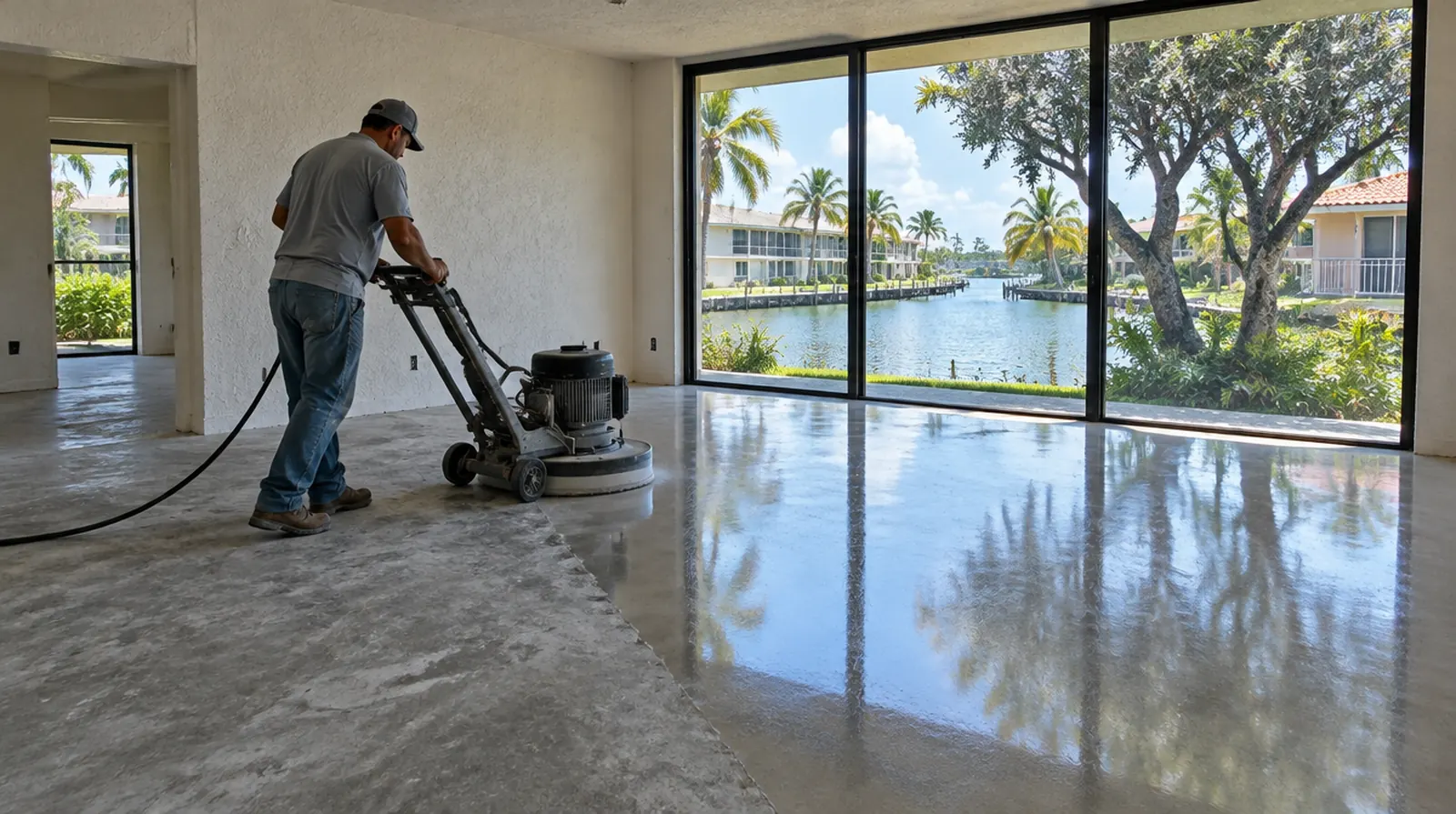
Polishing is a mechanical process, not a coating. We start with coarse diamond tooling to remove adhesive, thinset and surface imperfections. Then we move through progressively finer grits, similar to sanding wood, until the surface takes on the desired sheen. Along the way, we apply a densifier that reacts with the concrete to harden it. A penetrating guard or sealer finishes the job and helps resist stains.
The level of shine is up to you. A satin finish has a soft glow. A semi-gloss reflects lights and windows. A high gloss can look almost like glass. The amount of aggregate exposed is a choice as well, from a cream finish with little stone visible to a salt-and-pepper look or full exposure of the larger stones.
What to expect from an older slab
Older slabs have history. Tile removal leaves thinset ridges. Previous plumbing work leaves patches. Carpet tack strip leaves rows of small holes around the edges. Some slabs have cracks from settling. We grind away what we can and fill the rest with color-matched repair materials, but polished concrete is a natural material and will always show some character. Many owners love that look. If you want a perfectly uniform floor, a coating like metallic epoxy may be a better fit.
Benefits
- Very long life with no coating to peel
- Easy cleaning with a dust mop and damp mop
- Cool surface that suits hot climates
- Reflective finish that brightens rooms
- No added height at doors and transitions
- Low ongoing maintenance
Things to consider
Polished concrete is hard. Dropped glasses will break, and standing for long periods can be tiring without rugs. It can stain if acidic liquids such as wine, citrus or vinegar sit too long, though a quality guard reduces that risk. It can feel cold in winter, but that is rarely a concern here. Rugs and furniture pads are recommended in living spaces.
Condo considerations
Many condo associations allow polished concrete on ground floors and some allow it on upper floors with sound control measures. Check your association rules before starting. We can provide documentation and coordinate with the building manager about noise, dust control and work hours. Our grinders connect to HEPA vacuums to keep dust contained.
Process and timing
After tile or carpet is removed, polishing a typical home takes several days depending on size and condition. Edges and corners are polished with handheld tools. Baseboards are usually removed before the work and reinstalled afterward. Furniture can return once the guard has dried, usually the day after we finish.
Care
Dust mop often to remove grit that can dull the surface. Clean with a pH-neutral cleaner. Wipe spills promptly, especially acidic ones. Every few years, the floor can be burnished and the guard reapplied to restore the shine.
Polished concrete for businesses
Stores, offices and showrooms benefit from polished concrete's durability and brightness. It handles carts and foot traffic well and needs no stripping or waxing. For high-traffic retail, we recommend a regular cleaning program with an auto-scrubber.
Questions
Can every slab be polished? Most can. Very soft, heavily damaged or heavily patched slabs may be better suited to a coating.
Will it be slippery? Polished concrete is generally not more slippery than other hard floors when clean and dry. Spills should be wiped promptly.
How long does it last? With basic care, decades.
See if your slab can be polished
Call (954) 287-2488 for a free estimate.