Why outdoor concrete needs protection
Concrete looks solid, but it is full of tiny pores. Rain, sprinkler water and pool splash soak into those pores. In our climate, that water feeds mildew and algae, especially in shaded areas under trees and along north-facing walls. It carries dirt and minerals that discolor the surface. Over time, it can lead to surface scaling and help loosen the finish. Sun adds its own wear, fading colored concrete and breaking down unprotected surfaces.
A good sealer reduces all of that. It slows water absorption, makes cleaning easier, helps resist stains and keeps colors richer.
Types of sealers
Penetrating sealers. Silane and siloxane sealers soak into concrete and repel water from within. They do not change the look or feel of the surface and do not create a film that can become slippery. They are a strong choice for walkways, driveways and pool decks where traction matters.
Acrylic sealers. These form a thin film on top of the concrete and can add a wet look or satin sheen. They enhance color on stamped or stained concrete and pavers. They need reapplication every few years.
Polyurethane and polyaspartic sealers. These form harder, more durable films for areas with heavier wear. They cost more but last longer than acrylics.
We recommend a sealer based on the surface, the exposure and the look you want. In many cases, a penetrating sealer is the most practical choice for flat concrete here.
Surfaces we seal
- Front walkways and entry steps
- Back patios and screened porches
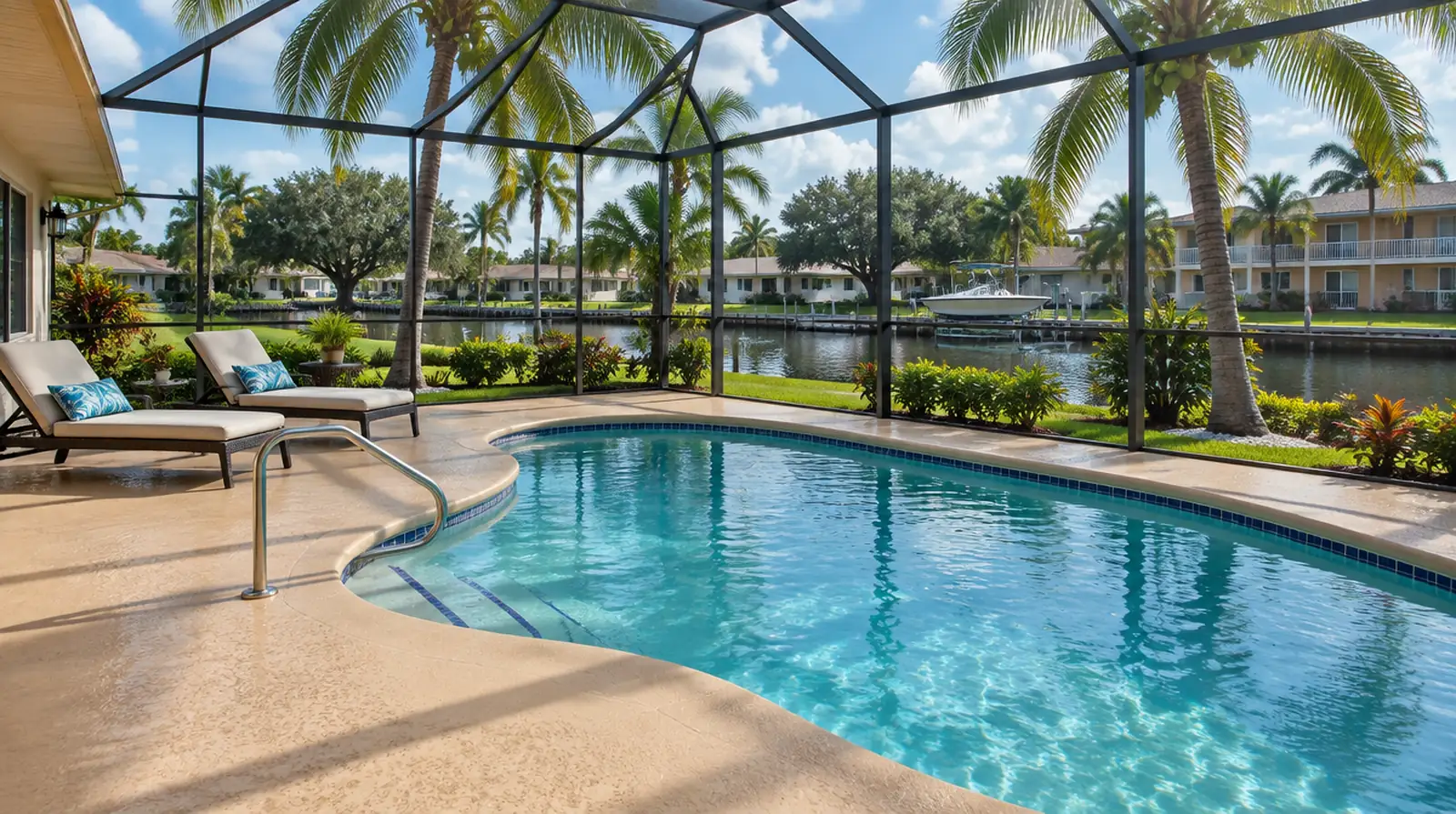
- Pool decks, including textured and spray-knock finishes
- Paver driveways, patios and walkways
- Plain and stamped concrete driveways
- Seawall caps and dock approaches
Cleaning comes first
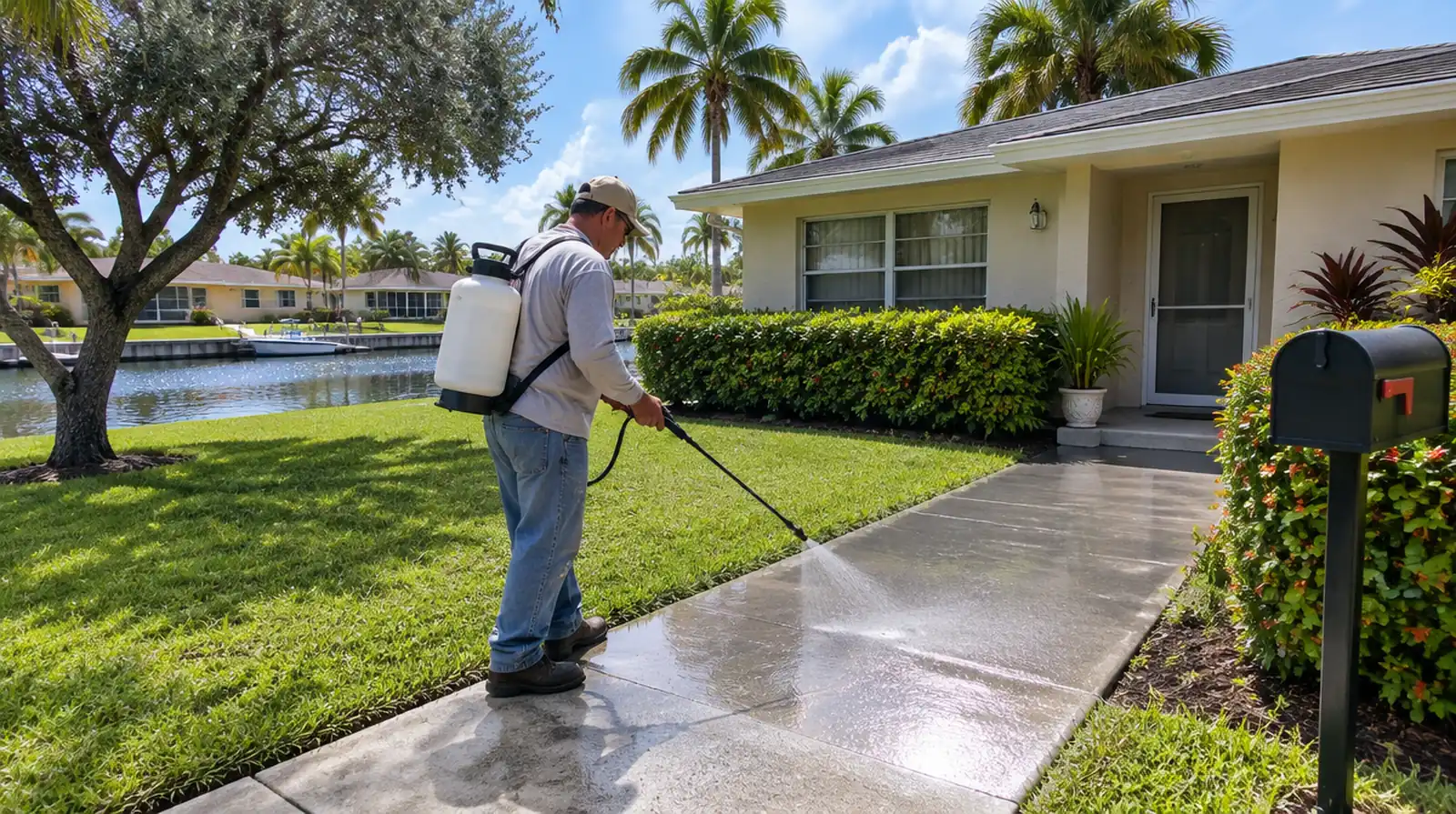
Sealer locks in whatever is on the surface, so cleaning matters. We pressure wash with surface cleaners, treat mildew and algae and remove rust and organic stains where possible. Oil stains get degreaser treatment. The surface must dry fully before sealing, which may mean waiting a day after washing during humid months.
Pool decks
Pool decks deal with chlorine, salt, sunscreen and constant foot traffic. Many have textured coatings that can wear thin or crack. We clean, repair small cracks and seal with a product suited to pool environments, keeping slip resistance in mind. If the deck coating is badly worn, we can discuss resurfacing.
Pavers
Paver patios and driveways are common here. Sealing pavers helps lock in joint sand, slows weed growth, reduces staining and enhances color. We clean the pavers, replace joint sand with polymeric sand when needed and apply a sealer with the finish you prefer.
How often to reseal
Penetrating sealers typically last several years. Acrylic sealers need attention every two to three years in full sun. Polyurethanes last longer. A simple water test helps: if water beads on the surface, the sealer is working. If water darkens the concrete quickly, it is time to reseal.
Timing and weather
Sealing needs dry conditions. In the rainy season, we schedule morning work and watch the forecast for afternoon storms. Most sealers need several hours without rain after application. We keep sprinklers off until the next day.
Sealing versus coating
Sealers protect concrete while keeping its basic look. Coatings, such as flake systems or driveway resurfacing, add color and a new surface. If your concrete is in good shape and you like how it looks, sealing is usually enough. If it is stained, spalled or uneven, a coating may be the better choice.
Questions
Will sealer make my walkway slippery? Penetrating sealers do not. Film-forming sealers can, so we add grit when needed.
Can you seal new concrete? Yes, once it has cured, usually about a month after pouring.
Does sealing stop cracks? No, but it reduces water entry that can worsen existing ones.
Get a sealing estimate
Call (954) 287-2488 for a free estimate.