The trouble with old garage floors
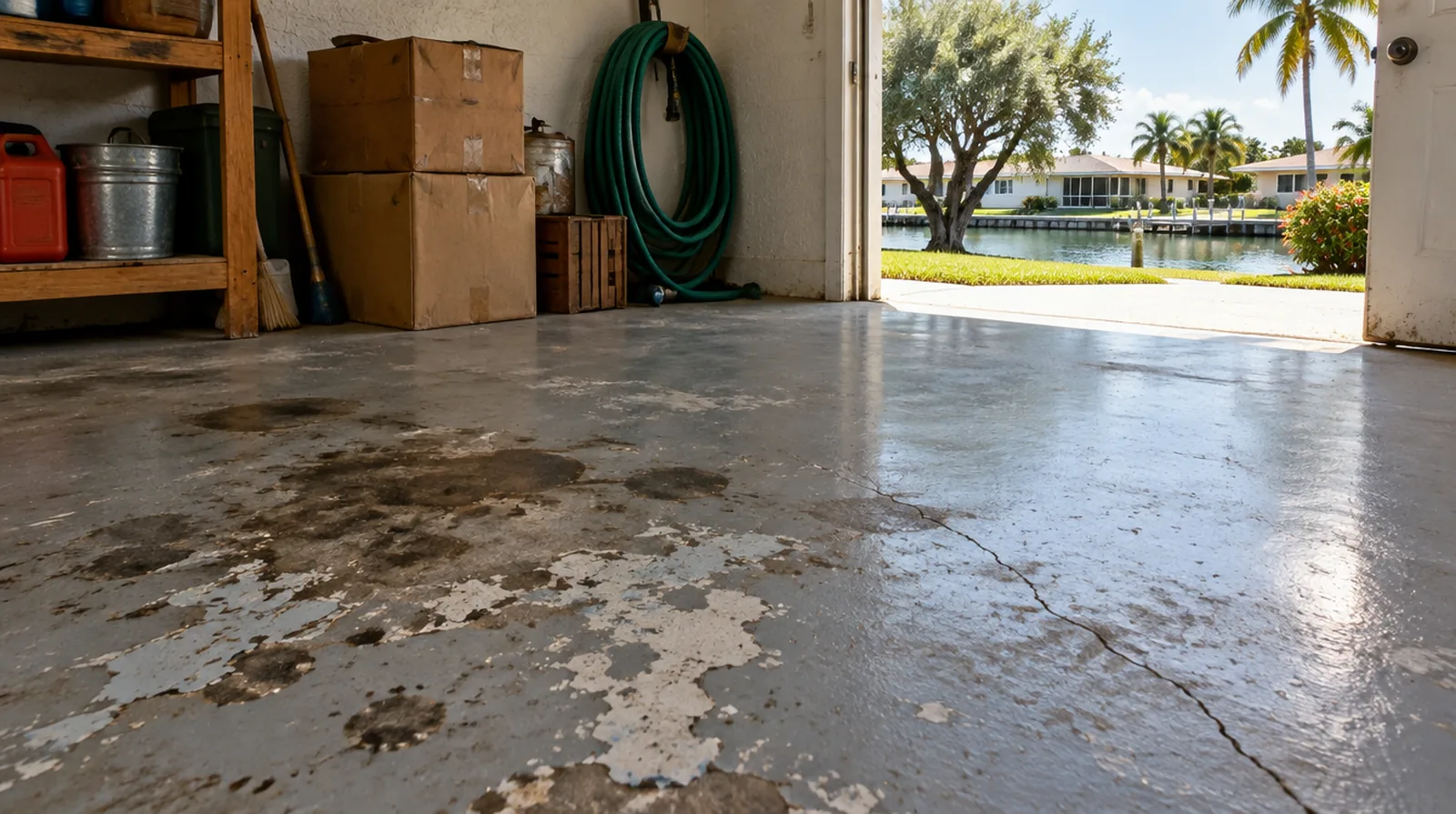
Walk into an older garage around town and you will probably see the same story. Gray or tan paint rolled on years ago now peels in strips where tires sit. Oil has soaked into the bare spots. A thin white powder appears near the walls after heavy rains. Some floors have a crack running from the door toward the back wall. None of that means the concrete is failing. It means the surface was never prepared or protected properly.
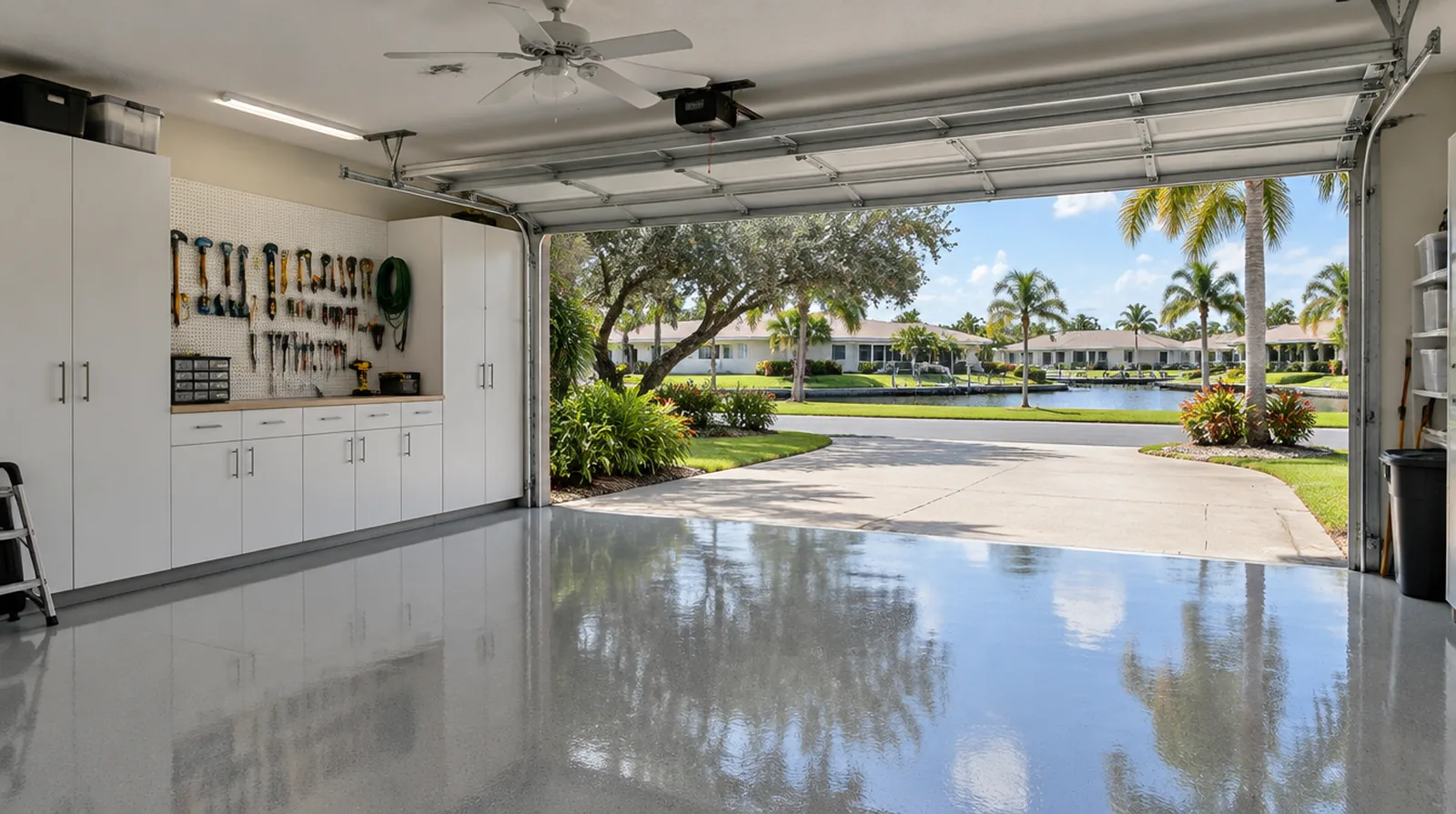
Garage floor epoxy fixes those issues with a bonded, multi-coat system. When it is installed on a properly ground slab, it seals out stains, stands up to hot tires and makes the space far easier to clean. It also brightens the room, which matters in a garage that serves as a workshop, laundry area or gym.
Our installation process
We start by clearing and inspecting the floor. Moisture is tested with a meter and, when readings are borderline, with a calcium chloride or relative humidity test. The results decide which primer we use.
Next comes grinding. A planetary diamond grinder removes paint, sealer, oil residue and laitance and opens the pores of the concrete. Edges and corners are handled with a hand grinder. Every bit of dust is collected by a HEPA extractor.
Repairs follow. Cracks are chased and filled with polyurea. Pits and spalls get an epoxy patching mortar. Rough expansion joints are cleaned and filled or honored depending on how much they move. Any repair that stands proud is ground flush.
Then the coating goes on. We apply a penetrating epoxy primer, or a moisture-mitigating primer if the slab is damp. A pigmented body coat builds thickness and color. Finally, a clear polyaspartic or urethane topcoat adds gloss, scratch resistance and UV stability. If you want texture, we add a fine aggregate to the topcoat.
Built for local heat and humidity
Summer garages here can feel like ovens, and slabs near canals or low-lying yards often carry moisture. Epoxy formulations that work fine in a cool, dry climate can fail here. Our primers tolerate damp concrete, and our topcoats handle temperature swings without becoming soft or brittle. When a garage door faces west and the floor gets afternoon sun, we always recommend a UV-stable topcoat so the color does not amber.
Hot tire pickup is another concern. Tires that come off a hot road can soften cheap coatings and lift them. A properly cured, high-solids epoxy with a hard topcoat resists that problem.
Choosing a finish
Solid-color epoxy gives a clean, modern look. Light gray is the most popular, followed by tan and medium gray. Many homeowners add a flake broadcast for texture and to hide dust. See our flake flooring page for that option. Those who want a showpiece floor sometimes choose metallic epoxy. We bring samples so you can compare in your own garage lighting.
Sheen is a choice as well. High gloss reflects light and looks dramatic, while satin hides scratches and dust better. We can deliver either.
Garages that do more than park cars
Many local garages serve as laundry rooms, storage areas, home gyms or hobby shops. A coated floor helps in each role. Detergent spills wipe up. Rubber gym mats sit flat on a level surface. Sawdust sweeps away instead of grinding into the concrete. If you plan to add cabinets, slatwall or a lift, tell us during the estimate, and we will coordinate timing and anchoring so nothing damages the new floor.
Timeline and cure
A typical two-car garage takes two to three days with a traditional epoxy system and about one day with a polyaspartic system. Foot traffic is usually fine within twelve to twenty-four hours. Cars should wait until the coating has fully hardened, typically two to three days for epoxy and a day or two for polyaspartic. Heavy chemicals should stay off the floor for a week.
During the work, we ask that you move cars and stored items out of the garage and keep pets and children away. We take care of the rest, including protecting walls, drywall and the bottom of the garage door.
What affects price
Cost depends on the size of the garage, how much old coating must be removed, the number and size of repairs, moisture conditions and the system you choose. A flake broadcast or metallic finish adds material and labor. We provide a written, itemized estimate after our visit so you can see exactly what is included.
Caring for your floor
Sweep regularly and clean with warm water and a pH-neutral cleaner. Wipe up oil and fluids promptly. Use a mat under motorcycle kickstands and jack stands. Avoid dragging heavy steel objects across the surface. With basic care, a quality garage floor will last for many years, and a fresh topcoat can renew it later.
Common questions
Can you coat over old paint? No. We remove it completely, because new epoxy can only be as strong as the layer below it.
Will cracks show? Filled cracks may show faintly in solid colors. Flake finishes hide them very well.
Is the floor slippery? We can add texture so it stays grippy when wet.
Do you work in carports too? Yes, with a UV-stable system designed for outdoor exposure.
Get a garage floor estimate
Call (954) 287-2488 for a free estimate.