The state of older driveways
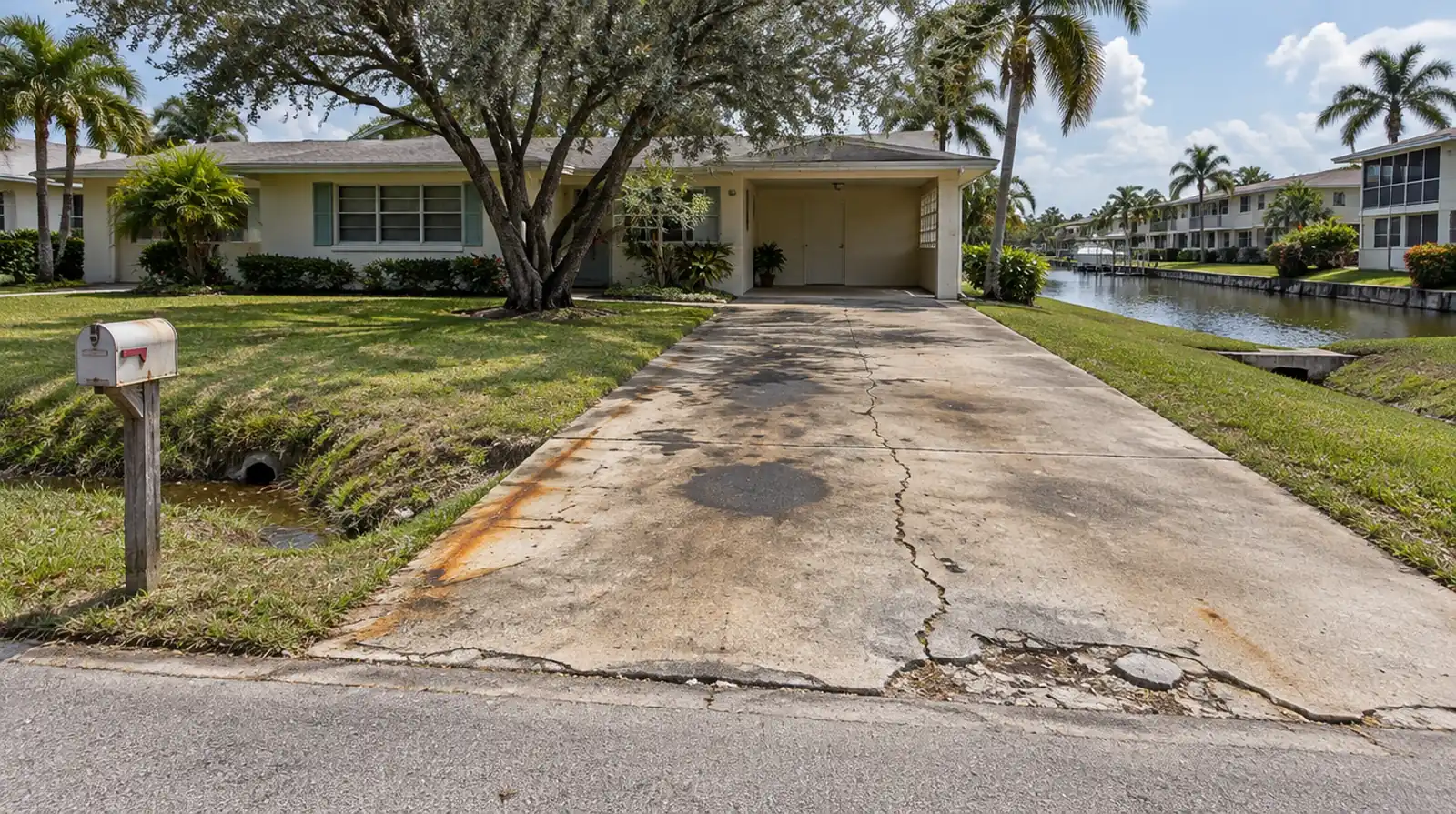
Many driveways in town were poured decades ago. They have carried countless cars, moving trucks and delivery vans. Oil has dripped, sprinklers have left orange rust stains from well water, tree roots have lifted sections and the surface has worn away in patches. Replacing a driveway means demolition, hauling and new concrete, which costs a lot and takes time. Resurfacing offers a practical alternative when the base slab is still structurally sound.
What resurfacing involves
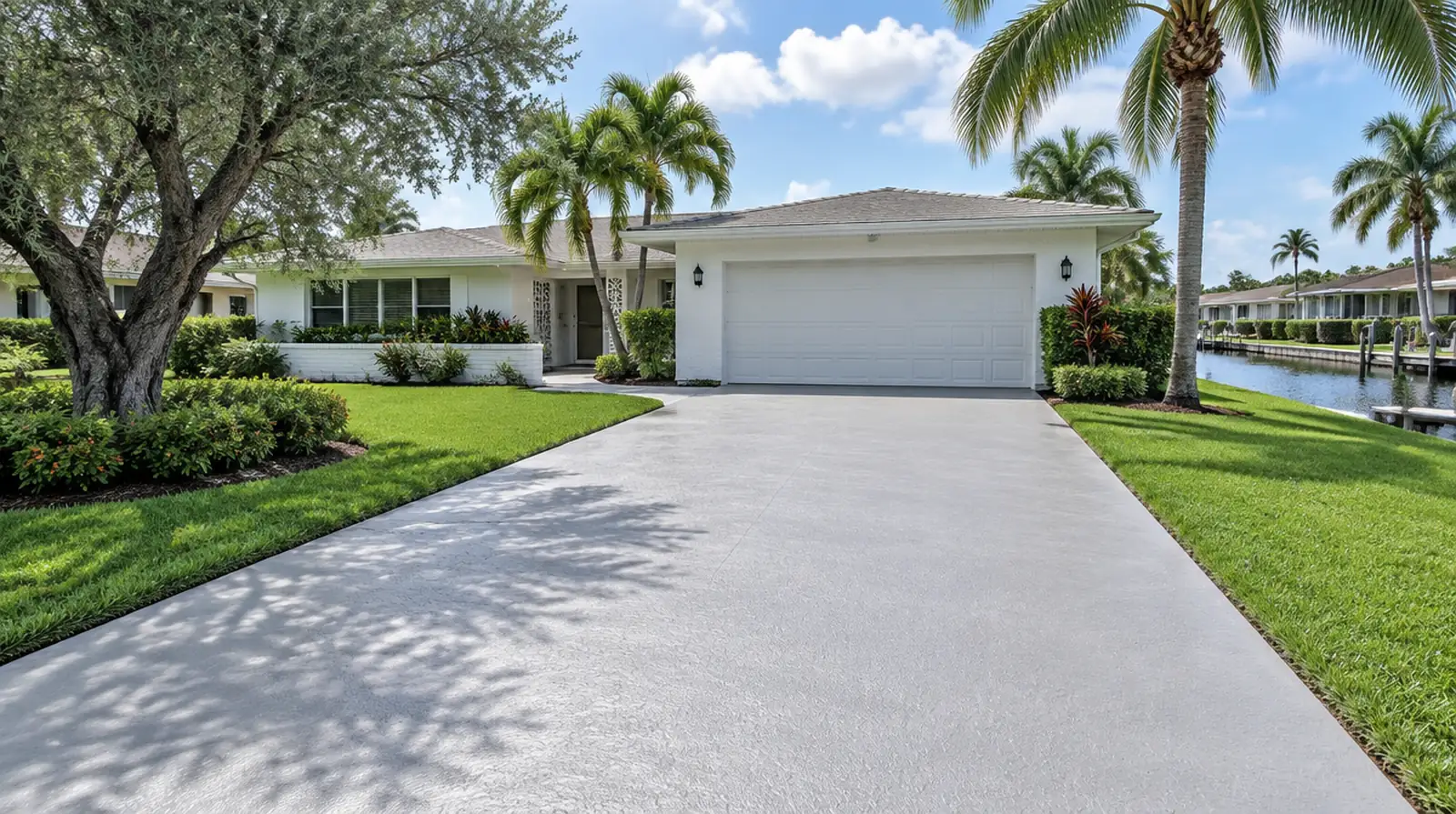
Driveway resurfacing applies a thin, polymer-modified cement overlay over the existing concrete. The overlay bonds tightly, covers stains and surface damage and creates a fresh, uniform surface. It can be finished smooth, broomed, with a knockdown texture or with decorative patterns. A sealer on top protects the new surface from stains and sun.
Our process
Inspection. We check for structural problems like sunken slabs, heaved sections from roots or wide cracks with vertical movement. Resurfacing does not fix structural issues, so we tell you if a section needs replacement first.
Cleaning. We pressure wash the driveway and treat oil and rust stains. Loose material is removed.
Repairs. Cracks are cleaned and filled. Spalled and pitted areas are patched. Control joints are marked so we can recut them after resurfacing.
Overlay. The resurfacing material is mixed and applied in sections, then finished with the chosen texture. Control joints are restored so the driveway can move naturally.
Sealing. Once cured, the surface is sealed with a UV-stable product. Color tints can be added if desired.
Colors and textures
Standard gray resurfacing gives a clean, new-concrete look. Tinted overlays in tan, light brown or terra cotta can complement stucco houses. Knockdown textures are popular because they add grip and hide minor imperfections. Stamped or stenciled patterns are available for a more decorative look. We bring samples and photos to help you choose.
Rust stains from irrigation
Many homes here use well water for irrigation, and the iron in that water leaves orange stains on concrete, stucco and walkways. Rust removers can lighten stains, but they return as long as sprinklers hit the surface. Before resurfacing, we suggest adjusting sprinkler heads or adding a filtration system. Sealed surfaces resist staining better and clean more easily.
Tree roots and lifted slabs
Shade trees planted near driveways decades ago now have large root systems that can lift concrete. Resurfacing over a lifted section will not level it. In those cases, the slab may need to be removed and repoured, sometimes along with root work by an arborist. We point these issues out at the estimate so the finished driveway lasts.
Why not just coat it with epoxy?
Fully exposed driveways face direct sun, rain, hot tires and moisture coming up from the ground. Standard epoxy is not designed for those conditions and tends to yellow, peel or blister. Polymer-modified overlays and breathable sealers handle exposure far better. For covered carports and garages, see our polyaspartic and flake options.
Timeline
Most driveways take two to three days from cleaning to sealing, depending on repairs and weather. Foot traffic is usually fine after a day. Cars should stay off for about three days to allow the overlay and sealer to cure. We plan around rain, which is a frequent factor in summer.
Maintenance
Rinse the driveway periodically and clean oil drips promptly. Reseal every few years to keep the surface protected and looking fresh. Avoid parking heavy equipment or dumpsters on resurfaced edges without protection.
Questions
How long does resurfacing last? With good preparation and periodic resealing, many years.
Will cracks come back? Moving cracks may reappear over time. We fill and detail them to minimize that.
Can you do walkways too? Yes. Many owners resurface the driveway and walkway together. Our sealing page covers other outdoor concrete.
Price a driveway resurfacing
Call (954) 287-2488 for a free estimate.